


How to Apply for Jobs in South Africa Online Successfully (Complete Guide)
Applying for jobs in South Africa has changed a lot over the past decade, with online platforms becoming the primary gateway between job seekers and employers. Today, most companies—whether in government, private sector, or state-owned enterprises—advertise vacancies online and expect applications to be submitted digitally. This shift has made job hunting faster and more accessible, but it has also increased competition, requiring applicants to be more strategic, prepared, and informed than ever before. Understanding how to apply for jobs in South Africa online is no longer optional; it is an essential skill for graduates, skilled professionals, and even first-time job seekers.
One of the biggest advantages of online job applications is convenience. You can search and apply for jobs from anywhere, at any time, using platforms such as company career pages, government portals, recruitment agencies, and popular job boards. These platforms allow you to filter opportunities by location, industry, qualification level, and contract type, making it easier to find roles that match your profile. However, this convenience also means employers receive hundreds—sometimes thousands—of applications for a single vacancy. As a result, simply uploading a CV is not enough; your application must be accurate, complete, and tailored to stand out in digital screening systems.
Another important aspect of applying for jobs online in South Africa is understanding employer expectations. Most online applications require a well-formatted CV, a clear and honest cover letter, and supporting documents such as certified copies of qualifications and ID. Some employers also use online assessments, questionnaires, or applicant tracking systems (ATS) that automatically scan applications for relevant keywords and experience. Knowing how these systems work, and how to align your CV and cover letter with the job description, can significantly improve your chances of being shortlisted.
Ultimately, learning how to apply for jobs in South Africa online is about more than just clicking the “Apply” button. It involves researching employers, preparing professional documents, following instructions carefully, and staying alert for scams and unofficial job adverts. With the right approach, online job applications can open doors to internships, learnerships, graduate programmes, and full-time employment across various sectors. This guide will help you understand the process, avoid common mistakes, and improve your chances of success in South Africa’s increasingly digital job market.
The Digital Way to Find Jobs in South Africa
Applying for jobs online in South Africa has become the most effective way for job seekers to connect with employers. With the rise of digital recruitment platforms, you can now apply for multiple positions from the comfort of your home. This guide will show you the step-by-step process and provide essential tips to increase your chances of getting hired.
1. Prepare Your CV and Cover Letter
Before you start applying online, make sure your CV (Curriculum Vitae) and cover letter are updated. Highlight your skills, qualifications, and work experience relevant to South African job markets. Tailoring your CV for each application can significantly improve your chances of landing an interview.
Tips:
- Use clear headings and professional formatting.
- Include keywords from the job description to pass applicant tracking systems (ATS).
- Keep your cover letter concise and engaging.
2. Research Popular Job Portals in South Africa
There are many online platforms where employers post vacancies. Some of the most popular job portals include:
Registering on these websites allows you to upload your CV, set up job alerts, and apply directly through the portal.
3. Create a Professional Online Profile
Many South African employers check online profiles before hiring. Create or update your LinkedIn profile and include:
- Professional photo
- Work experience and achievements
- Skills and endorsements
- Recommendations from previous employers or colleagues
A strong online presence increases your credibility and makes it easier for recruiters to find you.
4. Apply Strategically
Don’t apply for every job you see. Focus on positions that match your skills, experience, and career goals. Read the job description carefully and follow the application instructions precisely.
Pro Tip: Customize your cover letter and CV for each application. This shows employers that you are serious and attentive to detail.
5. Use Internal Links for More Guides
For more tips on job applications, CV writing, and career development in South Africa, visit our How To Guides.
6. Track Your Applications
Keep a record of the jobs you have applied for, the dates, and any responses. This will help you follow up professionally and stay organized.
7. Prepare for Online Interviews
Once your application is shortlisted, you may be invited for a video or phone interview. Practice common interview questions, ensure your internet connection is stable, and dress professionally.
After understanding how to apply, check current Jobs open now
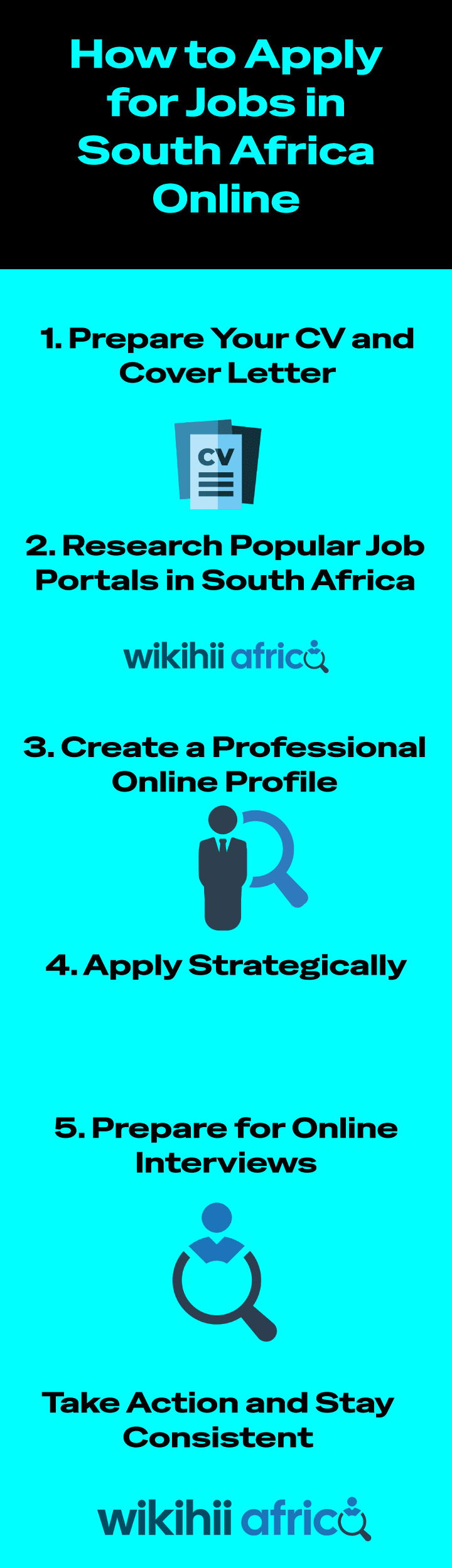
How to Apply for Jobs in South Africa Online [Infographic]
Conclusion: Take Action and Stay Consistent
Applying for jobs in South Africa online has become the standard pathway to employment, and success now depends on how well you understand and adapt to this digital process. As outlined in this complete guide, online job applications are not just about submitting a CV—they require careful planning, research, and attention to detail. From identifying legitimate job platforms and company career pages to preparing professional documents and following application instructions precisely, every step plays a critical role in improving your chances of being shortlisted. Job seekers who approach online applications strategically are far more likely to stand out in a competitive market.
One of the most important takeaways is the need for preparation and consistency. Keeping an updated CV, tailoring your cover letter to each role, and ensuring that all supporting documents are accurate and properly formatted can make a significant difference. Many South African employers use digital screening systems to filter applications, meaning that relevant keywords, clear work history, and correct information are essential. By aligning your application with the job requirements and presenting yourself professionally online, you demonstrate seriousness, competence, and readiness for the role.
Equally important is staying informed and alert throughout your job search journey. Online opportunities come with risks such as scams and misleading adverts, making it vital to apply only through trusted platforms and official company websites. Regularly checking application statuses, monitoring your email for responses, and meeting closing dates on time shows reliability and commitment. Patience is also key—rejections or delays are common, but each application builds experience and improves your understanding of what employers are looking for.
In conclusion, applying for jobs in South Africa online successfully is a skill that develops with practice, awareness, and persistence. By using the right platforms, submitting high-quality applications, and continuously improving your approach, you position yourself for long-term success in the job market. Whether you are a graduate, an experienced professional, or someone entering the workforce for the first time, mastering online job applications opens doors to internships, learnerships, graduate programmes, and full-time employment across the country. With the guidance provided in this complete guide, you are better equipped to navigate South Africa’s online job landscape with confidence and purpose.
