


Everything You Need to Know About NSFAS Bursary Application Process
Introduction
The National Student Financial Aid Scheme (NSFAS) is South Africa’s primary source of financial support for students from low-income households. NSFAS provides funding for tuition, accommodation, meals, and learning materials at public universities and TVET colleges.
Its important to understand NSFAS systems and How to apply because thousands of students are applying every year there is no room for mistakes, Understanding the NSFAS bursary application process is crucial for students who want to secure funding and avoid common mistakes. this guide breaks down everything you need to know to apply successfully.
Why NSFAS Funding Is Important
NSFAS helps bridge the gap for students who cannot afford higher education costs. By covering tuition fees and other essential expenses, it allows students to focus on their studies and graduate without the burden of debt. This funding also supports academic progression and long-term career opportunities.
Key Benefits of NSFAS
- Covers tuition fees at public universities and TVET colleges
- Provides allowances for accommodation, meals, and transport
- Includes funding for books and learning materials
- Supports skills development and career readiness
Who Is Eligible for NSFAS Funding?
To apply for NSFAS, you must meet the following criteria:
- Be a South African citizen or permanent resident
- Have a household income below the prescribed threshold
- Be registered or planning to register at a public university or TVET college
- Meet academic progression requirements if you are a returning student
For the most accurate and updated eligibility criteria, visit the official NSFAS website: www.nsfas.org.za.
Step-by-Step NSFAS Application Process
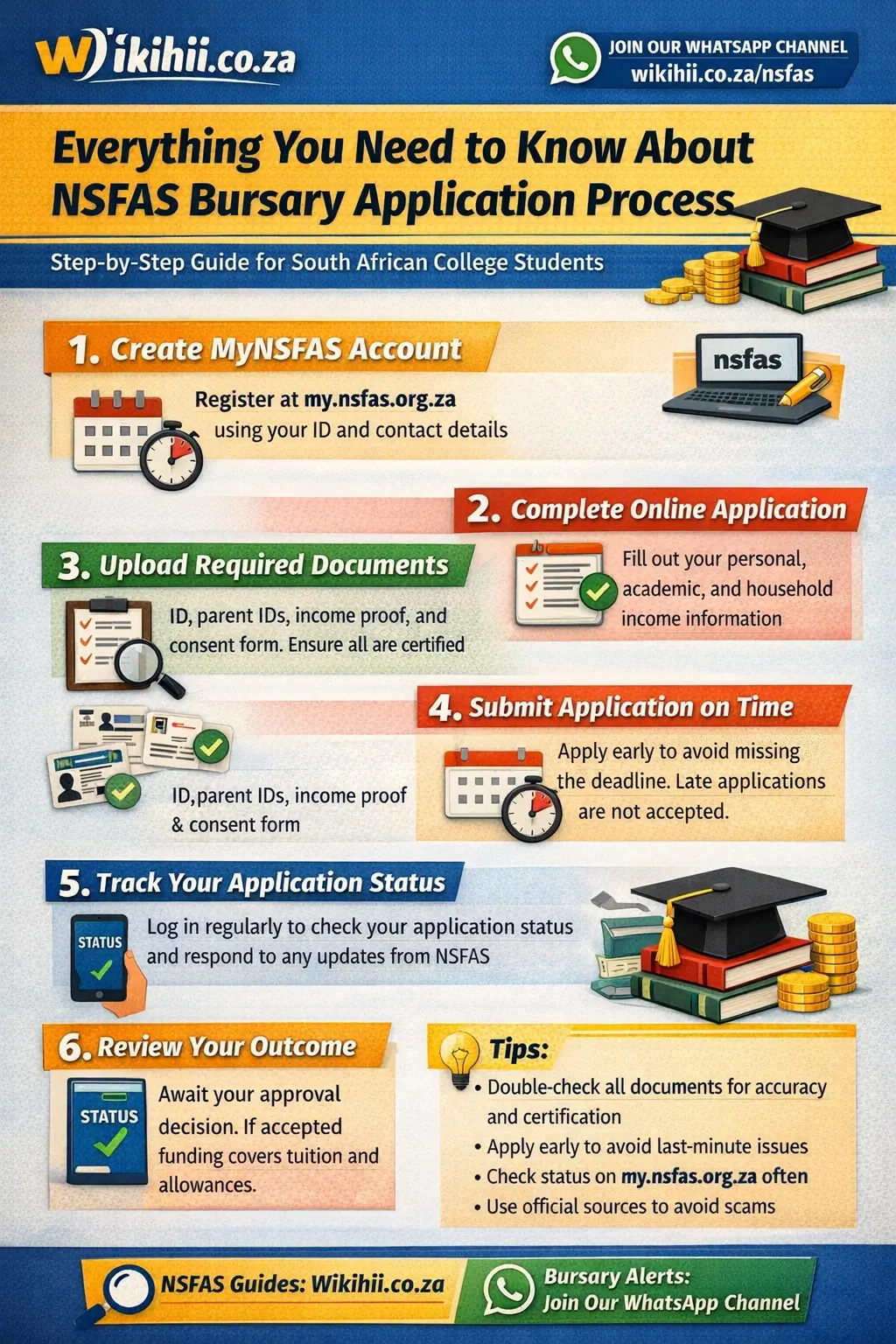
1. Create a MyNSFAS Account
Start by registering on the official NSFAS portal: my.nsfas.org.za. You will need an email address, a phone number, and your South African ID number to create your account.
2. Complete the Online Application
Fill in your personal details, academic information, and household income. Accuracy is key – any mismatched information can delay processing or lead to rejection.
3. Upload Required Documents
Prepare all supporting documents in advance. Commonly required documents include:
- Certified copy of your South African ID
- Certified copies of parent or guardian IDs
- Proof of household income or SASSA grant letters
- Signed consent form
Ensure that all uploads are clear, legible, and correctly certified.
4. Submit Before the Deadline
NSFAS applications have strict deadlines, and late submissions are not considered. Apply as early as possible to give yourself time to correct errors or provide additional documents if requested.
5. Track Your Application Status
After submission, log in regularly to check the progress of your application. NSFAS may request additional documents, and timely responses are essential to avoid delays.
6. Await Outcome and Funding Approval
Once your application is processed, NSFAS will notify you of the outcome. If approved, the funding will be applied directly to your tuition fees and allowances for accommodation, meals, and books.
Common Challenges Applicants Face
- Submitting incomplete or uncertified documents
- Using inconsistent personal information
- Applying after the closing date
- Not meeting academic progression requirements
Tips for a Successful Application
- Double-check all personal information before submission
- Keep certified copies of all documents
- Apply early to avoid technical issues or delays
- Regularly check your email and MyNSFAS account for updates
- Maintain good academic performance to secure continued funding
Useful Resources
- NSFAS Official Website: www.nsfas.org.za
- Department of Higher Education and Training (DHET): www.dhet.gov.za
- Wikihii NSFAS Bursary Guides: wikihii.co.za/nsfas-bursary
For daily bursary updates, application tips, and important reminders, join the official Wikihii WhatsApp channel: https://whatsapp.com/channel/0029VbClgTjFi8xUxCo3Dc2y
Conclusion
Applying for an NSFAS bursary may seem overwhelming, but by understanding the process, preparing the necessary documents, and applying early, students can significantly increase their chances of success. Stay informed, stay organized, and make use of official resources like Wikihii.co.za for guidance throughout the application journey.
