


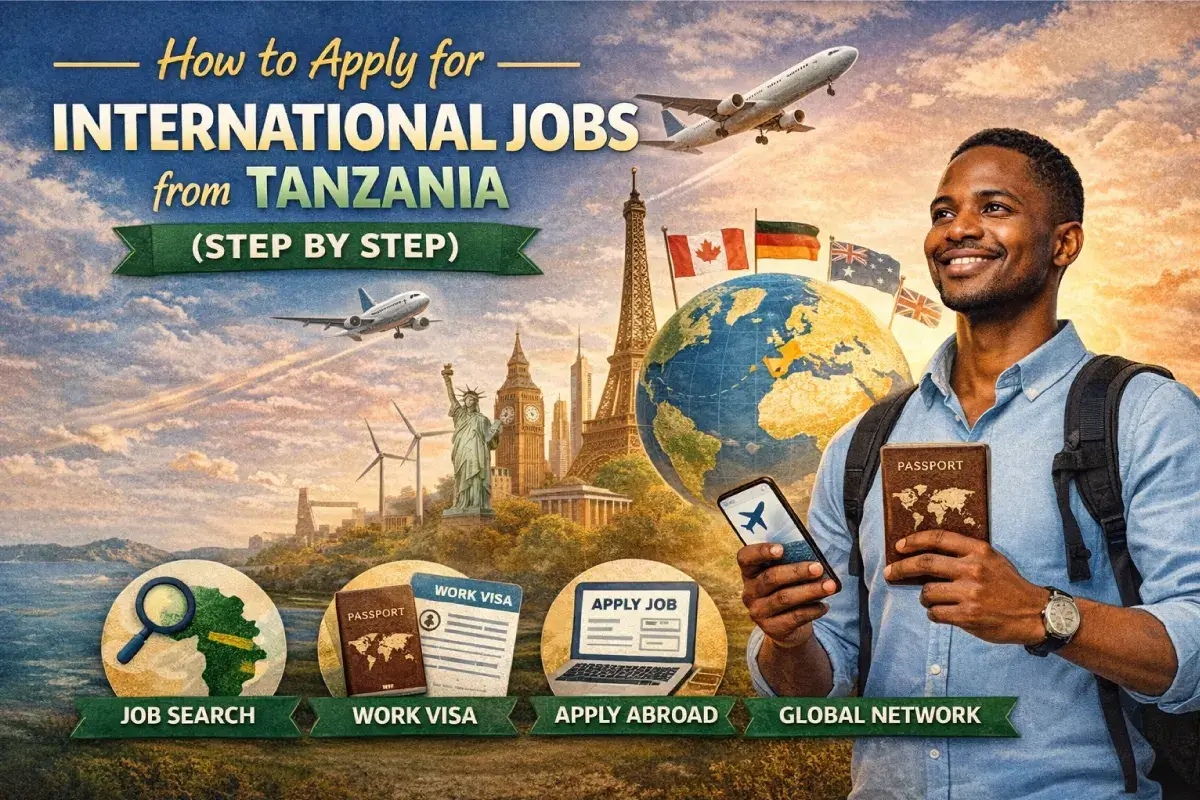
How to Apply for International Jobs from Tanzania (STEP BY STEP)
Applying for international jobs from Tanzania can be a life-changing opportunity. However, it requires careful planning, research, and preparation to stand out in a competitive global job market. This guide provides practical steps to help Tanzanians apply for international positions successfully.
Step 1: Identify Your Target Countries and Job Sectors
Before applying:
- Decide which countries you want to work in. Consider language, work permits, cost of living, and cultural fit.
- Identify job sectors in demand internationally, such as:
- Technology & IT
- Healthcare & Nursing
- Engineering & Construction
- Education & Teaching
- Finance & Accounting
- NGOs and International Development
Tip: Focus on countries with work visa programs friendly to skilled international applicants.
Step 2: Prepare a Professional International CV/Resume
International employers often have specific CV expectations:
- Keep it 1–2 pages.
- Include personal details, professional summary, work experience, education, skills, and certifications.
- Highlight measurable achievements, not just duties.
- Use English (or the official language of the target country).
- Avoid including photos unless required (common in some European countries).
Pro Tip: Tailor your CV to each country’s preferred format (e.g., American vs. UK CV).
Step 3: Write a Compelling Cover Letter
- Explain why you want to work internationally.
- Highlight your international experience or transferable skills.
- Keep it concise (1 page).
- Customize it for every job application.
Tip: Show cultural adaptability and willingness to relocate.
Step 4: Search for International Job Opportunities
- Job Portals:
- LinkedIn – filter by “remote” or “country.”
- Indeed Global
- Glassdoor
- Monster Worldwide
- Sector-specific portals (e.g., Devex for development jobs, TEFL for teaching abroad).
- Company Websites: Many international companies post vacancies directly.
- Recruitment Agencies: Some specialize in placing international talent.
Step 5: Understand Work Visa Requirements
- Each country has its own work visa rules. Research:
- Eligibility and required documents
- Sponsorship requirements
- Processing times
- Some countries require job offers before issuing work permits, while others allow applications for skilled migration programs.
Tip: Check official government websites to avoid scams.
Step 6: Apply Professionally
- Submit your application online or via email as specified.
- Follow file formats (usually PDF).
- Include all requested documents: CV, cover letter, certificates, references.
- Use a professional email address.
Pro Tip: Use clear subject lines like: Application for Software Engineer – [Your Name].
Step 7: Prepare for International Interviews
- Interviews may be via Zoom, Skype, or phone.
- Research the company’s culture, values, and mission.
- Prepare answers for common international interview questions:
- “Why do you want to work in [Country]?”
- “Describe your experience working with diverse teams.”
- “How would you handle relocation challenges?”
- Demonstrate strong communication and adaptability skills.
Step 8: Negotiate Offer and Relocation
- Compare salary, benefits, and cost of living.
- Ask about relocation assistance, health insurance, and visa support.
- Ensure the offer aligns with your expectations and visa eligibility.
Step 9: Keep Upgrading Your Skills
- Consider international certifications relevant to your field.
- Learn the language of your target country (if not English).
- Gain experience through international projects or remote freelance work.
Tip: Online courses, volunteering, or internships with international organizations can improve your profile.
Step 10: Use Networking and Social Media
- LinkedIn is crucial for connecting with international recruiters.
- Join professional groups and forums.
- Attend virtual career fairs and webinars.
Networking can often lead to opportunities not advertised publicly.
Research International Job Markets Strategically
Before applying, it’s crucial to research international job markets. Understanding which countries have high demand for your skills can save time and improve your success rate. For example, tech and healthcare professionals are highly sought after in countries like Canada, Germany, and Australia. Use job boards, LinkedIn insights, and industry reports to identify trends. Incorporating keywords like international jobs from Tanzania and jobs abroad for Tanzanians in your CV and LinkedIn profile can also boost visibility to recruiters.
Optimize Your Online Presence for Global Employers
In today’s digital job market, your online presence is key. Ensure your LinkedIn profile, professional portfolios, or personal website clearly highlight your international experience, skills, and certifications. Recruiters from abroad often search for candidates online before reaching out.
Use phrases such as apply for jobs abroad or Tanzanians working internationally in your profiles, meta descriptions, and portfolio summaries. A strong, optimized online presence can make the difference between being noticed or overlooked.
Frequently Asked Questions (FAQs)
1. Can Tanzanians apply for jobs abroad without prior experience?
Yes, Tanzanians can apply for international jobs even without prior experience. Many entry-level roles, internships, and volunteer positions are available for recent graduates or individuals looking to gain international exposure. Highlight transferable skills, language proficiency, and adaptability in your application.
2. Which countries are easiest for Tanzanians to get work visas?
Countries like Canada, Germany, Australia, and New Zealand have skilled migration programs that favor international applicants with in-demand skills. Research each country’s visa requirements and immigration policies before applying.
3. How can I find legitimate international job opportunities?
Use reliable job portals such as LinkedIn, Indeed, Glassdoor, Monster, and sector-specific platforms like Devex or TEFL for teaching positions. Avoid websites that ask for upfront payment for job placement, as they are often scams.
4. Do I need to know the local language to work abroad?
It depends on the country and the role. English-speaking countries may require only English proficiency, while others, like Germany or France, may prefer candidates with local language skills. Learning basic phrases or obtaining a language certificate can improve your chances.
5. How long does it take to get hired for an international job?
The timeline varies by country and employer. Some recruitment processes take a few weeks, while others can take several months, especially if visa sponsorship is required. Patience and follow-up communication are key.
6. Can I apply for international jobs while still working in Tanzania?
Yes, you can apply for jobs abroad while employed locally. Make sure your CV and LinkedIn profile reflect your readiness to relocate. Preparing applications in advance allows for smooth transition if you secure a position.
Conclusion: How to Apply for International Jobs from Tanzania
Applying for international jobs from Tanzania is achievable with strategy, persistence, and preparation. By following these steps, you can maximize your chances of securing a rewarding global career.
Final Tips for Success
- Always tailor applications to international standards.
- Highlight transferable and global skills.
- Be patient—international recruitment processes may take weeks or months.
- Avoid scams—never pay upfront fees for job applications.
- Stay informed about immigration policies in your target country.