


NSFAS Bursary Eligibility Criteria for South African Students
The National Student Financial Aid Scheme (NSFAS) provides funding to eligible students who them or their families cannot afford to pay for university or TVET college fees as well as money to buy meals and other needs. Because too many students apply so one cannot make mistake on the application process which start by understanding NSFAS Bursary Eligibility Criteria.
Introduction
NSFAS is a government-funded financial aid programme that helps students from low-income families to access higher education at public universities and Technical and Vocational Education and Training (TVET) colleges in South Africa. The funding covers tuition fees, allowances for accommodation, transport, books, and other study-related costs depending on your circumstances.
Whether you’re applying for the first time or renewing your funding, knowing the eligibility criteria can greatly increase your chances of approval.
Start by reviewing the NSFAS bursary requirements so you know what’s expected.
Then follow our detailed application guide to apply correctly.
Want additional funding options? See our full list of bursaries for 2026.
Who Is Eligible for NSFAS Funding?
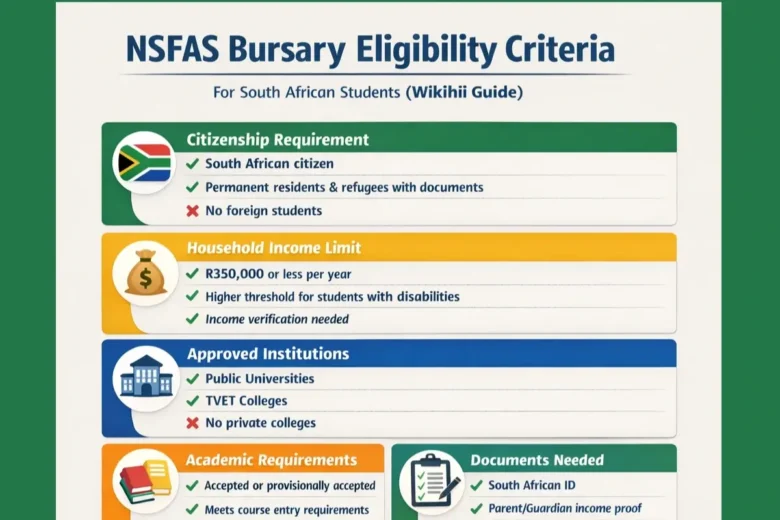
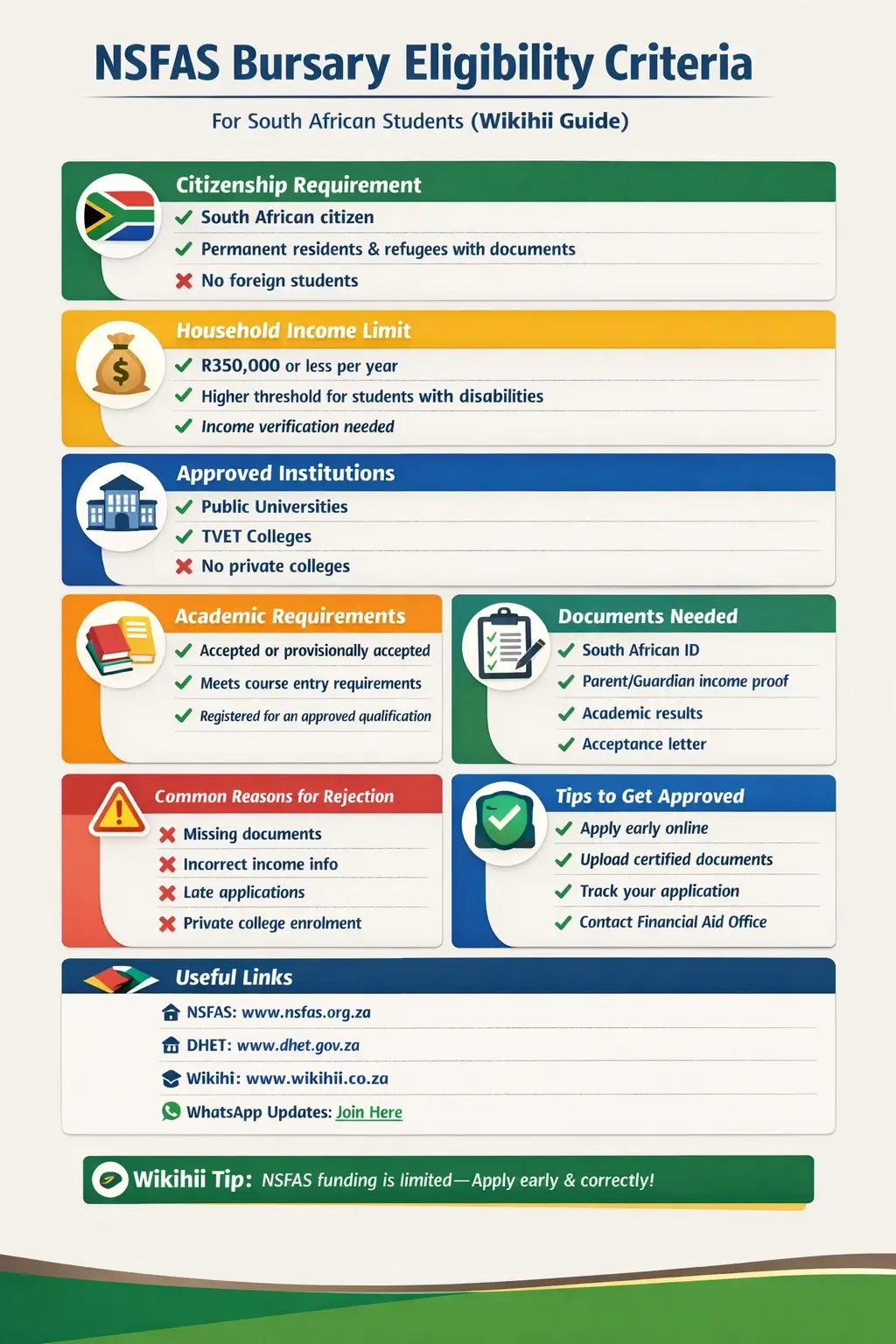
To qualify for a NSFAS bursary, you must meet several criteria related to citizenship, financial means, academic status, and institutional acceptance.
South African Citizenship
To be eligible for NSFAS funding, you must be a South African citizen, or have a permanent residence status or refugee status with valid documentation. Applicants without the correct documentation typically cannot be considered for funding.
Financial Means Test
NSFAS is intended for students from low-income households. As such, your household combined annual income must fall below a certain threshold:
- Household income of R350,000 or less per year for general eligibility.
- If you have a disability, the income threshold may be higher.
This financial means test ensures that funding goes to students who genuinely need financial support to pursue their studies.
Academic Admission
You must be accepted or provisionally accepted at a public university or TVET college in South Africa. NSFAS does not fund private institutions or foreign education programs.
For university applicants, you must meet the minimum academic admission requirements for your chosen course. For TVET applicants, you need a valid National Senior Certificate or equivalent qualification suitable for your course.
How to Apply NSFAS Bursary and What to Expect
Applying for NSFAS is done through the official NSFAS portal. Follow these steps:
- Prepare Your Documents – You will need your ID, proof of income (yours and your parents/guardians), school results, and acceptance letter from your institution.
- Visit the NSFAS Website – Go to the official NSFAS application portal at https://www.nsfas.org.za.
- Register or Log In – Use your ID number as your username and follow the prompts to complete the online application.
- Upload Required Documents – Make sure all documents are clear and up to date.
- Submit the Application – After submission, you will receive tracking details. NSFAS may request additional verification.
Remember to apply within the NSFAS application window — applications are usually open annually, and deadlines are strictly enforced.
Why NSFAS Funding Matters
Expanding Access to Education
NSFAS plays a crucial role in widening access to higher education for students from underprivileged backgrounds. Financial barriers often prevent talented students from completing their studies, and NSFAS helps bridge that gap.
Reducing Student Debt
Unlike private loans, NSFAS funding is not required to be repaid once your studies are completed, which means less financial stress after graduation.
Common Challenges in Meeting NSFAS Funding Eligibility
Even if you meet the basic criteria, many students face challenges during the application process:
- Incomplete or incorrect documentation – Errors in uploaded documents can lead to delays or rejection.
- Missed deadlines – NSFAS applications must be submitted before the closing date.
- Verification delays – NSFAS may take time to verify income and other details.
To avoid these challenges, start preparing your documents early and double-check all the information before submission.
Tips for Success
- Keep all documents ready in advance.
- Check the NSFAS website regularly for updates and deadlines.
- Contact your institution’s financial aid office if you have questions — they often help with NSFAS applications.
- Save copies of everything you submit and any correspondence from NSFAS.
Staying organized and proactive can significantly improve your chances of receiving funding.
Useful Resources
Here are a few official sites and helpful resources for applicants:
- NSFAS Official Website: https://www.nsfas.org.za
- Department of Higher Education and Training: https://www.dhet.gov.za
- University Financial Aid Offices: Check the specific university’s website for guidance.
- More NSFAS guides: https://wikihii.co.za/nsfas-bursary-requirements-for-university-students/
- Join WhatsApp updates: https://whatsapp.com/channel/0029VbClgTjFi8xUxCo3Dc2y
Conclusion
Getting NSFAS funding can make a huge difference in your educational journey. By understanding the eligibility criteria and preparing your application carefully, you’ll be in a better position to secure the support you need. Remember to monitor official channels, prepare thoroughly, and seek help early if you encounter challenges. Good luck with your application and studies!
