


Top Tips to Secure NSFAS Funding for College Students in South Africa
Introduction
Getting Higher education is the dream of every south african youth (boys and girls), But obtaining higher education requires hard work and most important Financial support as we understand not every family afford the money to support their children in securing higher education thats where NSFAS came in. In this guide Wikihii africa shares practical and proven tips to help college students improve their chances of securing NSFAS funding.
Why NSFAS Funding Matters for College Students
NSFAS plays an important role in promoting equal access to education in South Africa by providing education funding to all students who meet requirements. NSFAS ensures that students from low-income households can study without financial pressure and focus on academic success, this Top Tips to Secure NSFAS Funding for College Students in South Africa will help you not to make any mistakes when applyng.
Key Benefits of NSFAS Funding
- Covers tuition fees at public universities and TVET colleges
- Provides allowances for accommodation, meals, and transport
- Includes book and learning material allowances
- Supports skills development and future employability
Top Tips to Secure NSFAS Funding Successfully
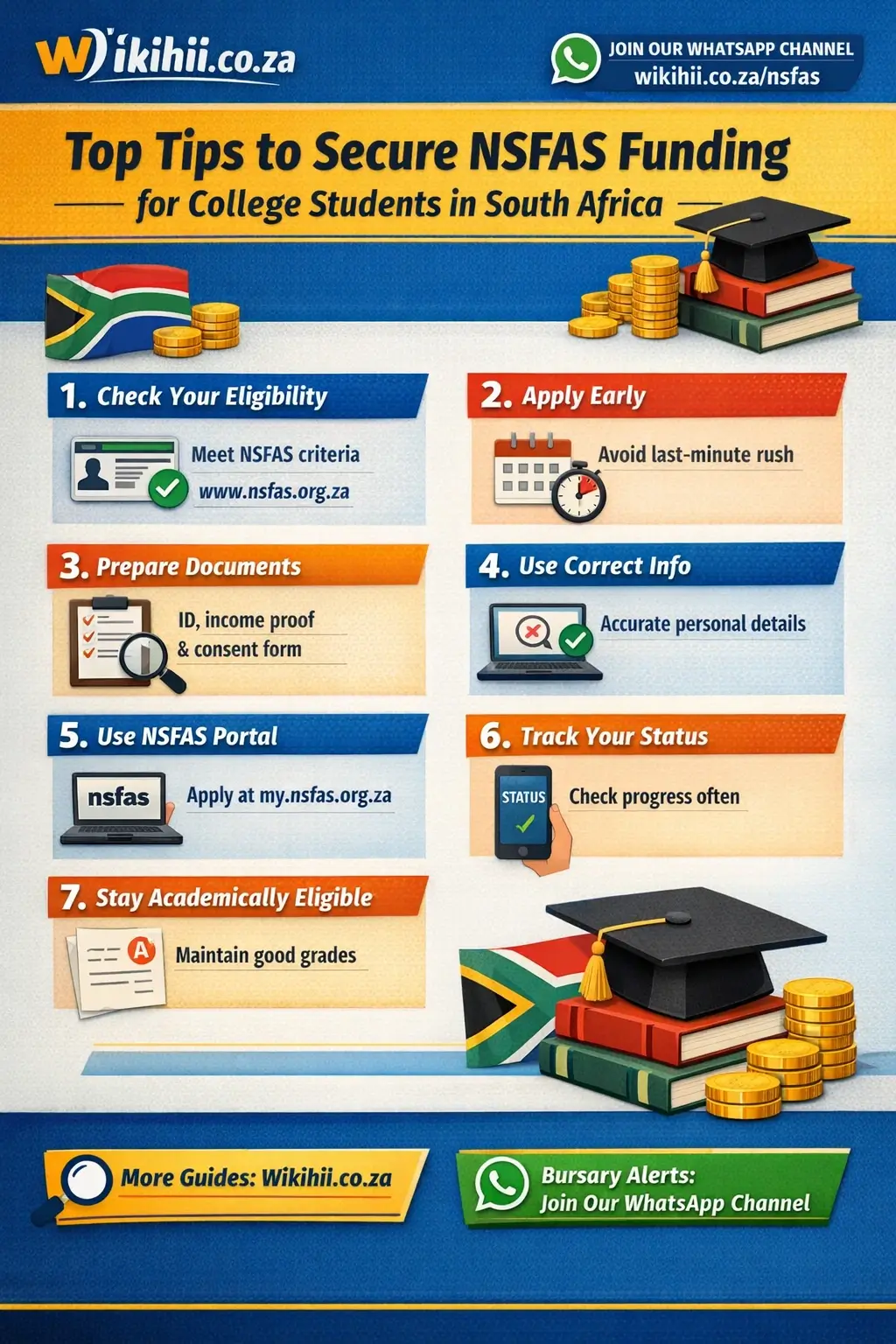
1. Understand NSFAS Eligibility Requirements
Before applying, make sure you meet all NSFAS requirements. Applicants must be South African citizens from households earning below the set income threshold and must be registered or planning to register at a public institution.
Always verify requirements on the official NSFAS website: https://www.nsfas.org.za
2. Apply Early to Avoid Rejection
Applying early reduces the risk of technical errors and missed deadlines. Early applicants also have more time to fix mistakes or upload additional documents if requested.
3. Prepare All Required Documents in Advance
Missing or unclear documents are one of the most common reasons applications are rejected. Make sure you have:
- Certified copy of your South African ID
- Certified copies of parent or guardian IDs
- Proof of household income or SASSA grant letter
- Completed and signed consent form
4. Use Accurate and Consistent Information
Ensure that your personal details match across all documents and your NSFAS profile. Differences in names, ID numbers, or dates of birth can delay or invalidate your application.
5. Apply Only Through the Official NSFAS Portal
Always submit your application through the official NSFAS portal at https://my.nsfas.org.za. Avoid agents or websites claiming they can apply on your behalf.
6. Track Your NSFAS Application Status
After submitting your application, log in regularly to check your status. NSFAS may request additional documents, and delays in responding can affect your approval.
7. Maintain Good Academic Performance
Returning students must meet academic progression requirements. Poor performance or repeated failures may result in NSFAS funding being discontinued.
Common Challenges Faced by NSFAS Applicants
- Submitting incomplete or incorrect documents
- Applying after the closing date
- Providing incorrect household income details
- Not meeting academic progression rules
Top Tips to Secure NSFAS Funding for First-Time College Students
- Seek help from your school or college financial aid office
- Use an active email address and phone number
- Keep copies of all documents you upload
- Follow official NSFAS announcements and updates
Tips & Important Notes
When applying for NSFAS funding, attention to detail can make all the difference. Always check that your personal information is consistent across all documents and the application portal, and ensure that every required document is correctly certified and uploaded. Submit your application as early as possible to avoid last-minute errors or delays.
Keep track of your application status regularly, and respond promptly if NSFAS requests additional information. For returning students, maintaining good academic performance is essential, as NSFAS monitors progress before approving continued funding. Finally, rely only on official sources like the NSFAS portal (https://my.nsfas.org.za) and trusted student funding guides, such as Wikihii (https://wikihii.co.za), to avoid scams or misinformation.
Useful NSFAS and Student Funding Resources
- NSFAS Official Website: https://www.nsfas.org.za
- Department of Higher Education and Training (DHET): https://www.dhet.gov.za
- Detailed NSFAS guides and updates on Wikihii: https://wikihii.co.za/nsfas-bursary/
Want to explore more options? Check out the full list of bursaries available in 2026.
Government bursary funding is also available. Learn about the NSFAS bursary application guide.
Before applying for NSFAS, read the NSFAS eligibility info for university students.
For daily NSFAS updates, bursary alerts, and student funding news, join the Wikihii WhatsApp channel:
https://whatsapp.com/channel/0029VbClgTjFi8xUxCo3Dc2y
Conclusion
Securing NSFAS funding as a college student is achievable if you apply early, submit correct documents, and stay informed throughout the process. By following these tips, you significantly increase your chances of approval. For more South African bursary guides, NSFAS news, and student funding advice, visit https://wikihii.co.za regularly.
